
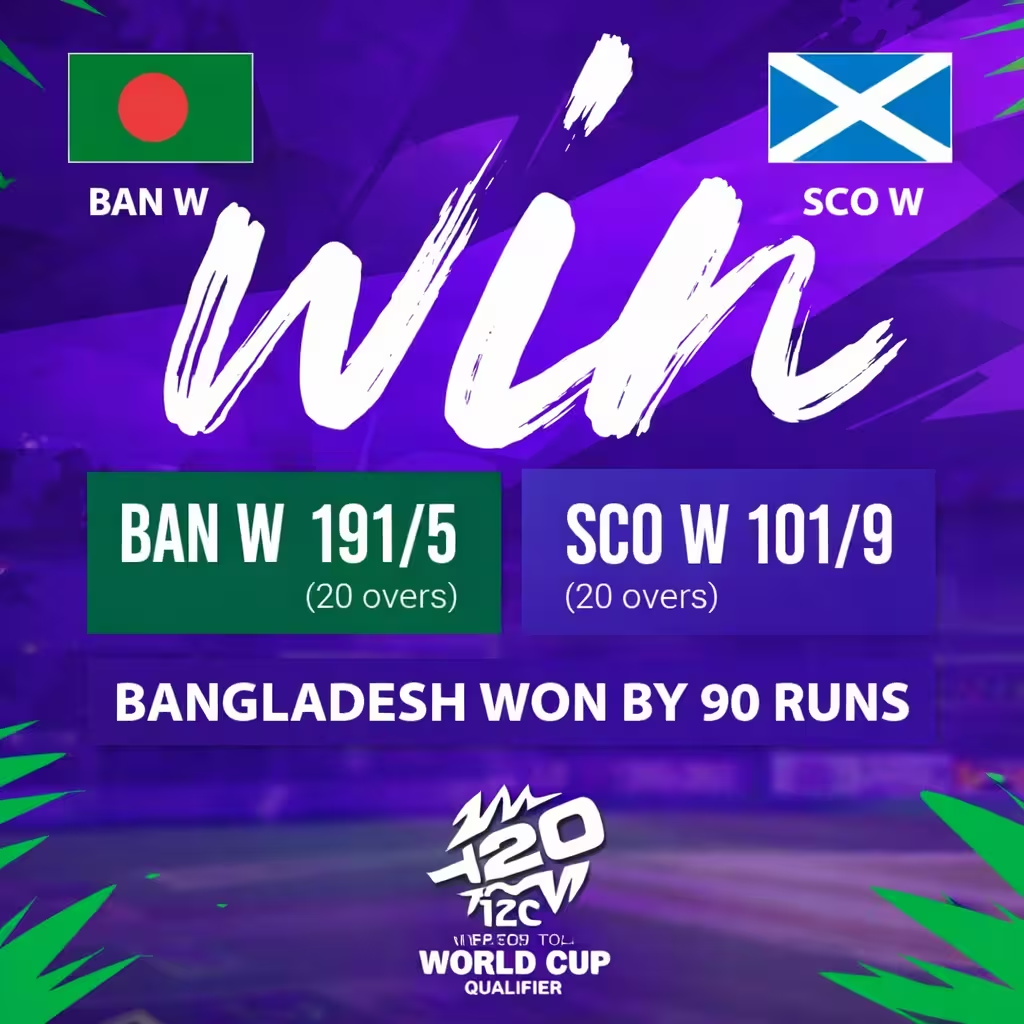
Bangladesh Women produced a dominant performance to defeat Scotland Women by 90 runs in the ICC Women’s T20 World Cup Qualifier Super Six match at Kirtipur. Led by a brilliant unbeaten 56 from captain Nigar Sultana and a destructive knock from Sobhana Mostary, Bangladesh posted a massive total before bowling Scotland out cheaply. The victory sealed Bangladesh’s qualification for the 2026 Women’s T20 World Cup and extended their winning streak to six matches.
Playing at the Tribhuvan University International Cricket Ground on January 30, 2026, Bangladesh delivered their most comprehensive performance of the tournament. The Bangladesh women 90 run win wasn’t just about margin—it showcased tactical superiority, explosive batting, and disciplined bowling that left Scotland without answers.
This Bangladesh vs Scotland Women match report reveals how the Tigresses dismantled their opponents across all departments, setting records while confirming their status among cricket’s elite nations.
Match Summary
Bangladesh won the toss and chose to bat first on what appeared to be a batting-friendly surface at Kirtipur. Their decision proved astute as openers Dilara Akter and Juwairiya Ferdous laid a solid foundation with a 67-run partnership.
Dilara Akter looked in ominous touch, smashing 39 runs off 28 deliveries before departing. Her aggressive approach set the tone, allowing Bangladesh to maintain momentum throughout their innings. Juwairiya Ferdous contributed 22 in the opening stand, while Sharmin Akter Supta added 15 runs to keep the scoreboard ticking.
However, the real carnage began when captain Nigar Sultana joined Sobhana Mostary at the crease. The pair stitched together a breathtaking 100-run partnership for the fourth wicket that completely demoralized Scotland’s bowling attack. Bangladesh eventually posted 191/5 in their 20 overs—their second-highest total in T20 International cricket.
Chasing 192 for victory, Scotland needed a strong start but suffered a nightmare beginning. Opener Darcy Carter was dismissed off the very first ball by Marufa Akter, setting a catastrophic tone. Scotland never recovered from that blow, stumbling to 101/9 in their 20 overs.
Only Pippa Sproul (27 off 23 balls) and Megan McColl (20 off 22 balls) showed resistance. The rest of the batting lineup crumbled under relentless pressure from Bangladesh’s spinners and seamers. The comprehensive Bangladesh women 90 run win confirmed their dominance in the Super Six stage.
First Innings: Bangladesh’s Batting Masterclass
Bangladesh’s innings unfolded in three distinct phases. The opening stand provided stability, the middle overs saw consolidation, and the final phase witnessed explosive hitting that propelled them past 190.
Dilara Akter’s intent was clear from the outset. She targeted loose deliveries, finding boundaries regularly while rotating strike effectively. Her dismissal could have derailed momentum, but Sharmin Akter Supta ensured no collapse occurred.
When Nigar Sultana arrived at the crease, Bangladesh were positioned at 91/3 after 11.2 overs. What followed was a captain’s knock that will be remembered for years. Nigar Sultana 56 vs Scotland showcased technical excellence combined with aggressive intent.
Sobhana Mostary complemented her captain perfectly. She struck seven boundaries and two sixes in her 23-ball blitz, maintaining a strike rate exceeding 200. Their partnership accelerated from measured accumulation to brutal assault, leaving Scotland’s bowlers helpless.
Katherine Fraser and Priyanaz Chatterji each took a wicket but conceded 39 and 40 runs respectively in their four-over spells. Chloe Abel endured a particularly difficult day, conceding 44 runs without claiming a wicket—a new unwanted record for Scotland in Women’s T20 Internationals.
Second Innings: Scotland’s Batting Collapse
Scotland’s chase began disastrously when Marufa Akter trapped Darcy Carter lbw off the first delivery. That early blow shattered confidence, and Scotland never built the partnerships necessary to challenge Bangladesh’s total.
Megan McColl and Ailsa Lister tried stabilizing the innings, but tight bowling maintained constant pressure. Bangladesh’s fielding was equally impressive, with sharp catches and athletic stops preventing any momentum building.
Pippa Sproul, making her T20I debut, showed fighting spirit with 27 runs. Her innings contained three boundaries and demonstrated technique that Scotland will hope to build upon. Unfortunately, support from the other end proved inadequate.
The spin duo of Shorna Akter and Nahida Akter strangled Scotland’s middle order. Their combined figures of 3/34 from eight overs reflected economy and wicket-taking ability. Marufa Akter returned to claim two more victims, finishing with excellent figures of 3/25.
Scotland’s innings limped to 101/9, falling 90 runs short. The margin highlighted not just Bangladesh’s superiority on the day but also the gulf in experience and execution under pressure.
Key Performers
Nigar Sultana (56* off 35 balls)
The Bangladesh captain delivered when it mattered most. Her unbeaten 56 runs featured five boundaries and three sixes, but numbers alone don’t capture her innings’ importance. Nigar Sultana 56 vs Scotland was about timing, placement, and leadership.
She paced her innings perfectly, starting cautiously before launching an assault during the death overs. Her ability to find boundaries against both pace and spin demonstrated complete mastery of conditions at Kirtipur. Moreover, her partnership with Sobhana Mostary changed the match’s complexion entirely.
As captain, she led by example. Her field placements, bowling changes, and tactical decisions throughout Scotland’s innings showcased sharp cricketing intelligence. The Player of the Match award was richly deserved.
Sobhana Mostary (47 off 23 balls)
If Nigar provided stability, Sobhana Mostary brought fireworks. Her explosive 47 runs came at a strike rate of 204.34, including seven fours and two sixes that peppered the Kirtipur boundaries.
What impressed most was her shot selection. Rather than wild slogs, Sobhana played proper cricket shots executed with immense power. She targeted specific bowlers, exploited gaps in the field, and never allowed Scotland’s bowling attack to settle.
The 100-run partnership with her captain will be studied as a blueprint for middle-order acceleration. Their communication, running between wickets, and mutual understanding exemplified elite batting partnerships.
Marufa Akter (3/25 in 4 overs)
Bangladesh’s pace spearhead set the tone with that crucial first-ball dismissal of Darcy Carter. That wicket provided exactly the start Bangladesh needed, putting Scotland immediately on the back foot.
Marufa’s spell showcased skill, not just aggression. She mixed up her lengths, used variations effectively, and maintained pressure throughout. Her economy rate of 6.25 in a match where 292 runs were scored demonstrated exceptional control.
Her three wickets came at different stages of Scotland’s innings, preventing any recovery. Whether swinging the new ball or executing yorkers at the death, Marufa proved she’s developed into a complete fast bowler.
Shorna Akter (2/13 in 4 overs)
The most economical bowler on display, Shorna Akter strangled Scotland’s middle order with accurate spin bowling. Her figures of 2/13 in four overs reflected miserly bowling that gave batters no freedom.
Operating in tandem with Nahida Akter, Shorna created constant pressure. Her variations kept batters guessing, while her accuracy meant scoring boundaries required significant risk. Scotland’s batters took those risks and lost their wickets.
Dilara Akter (39 runs and 4 dismissals)
Dilara Akter’s all-round contribution deserves special mention. Her aggressive 39 runs gave Bangladesh a flying start, while her record-breaking four dismissals behind the stumps showcased complete wicketkeeping excellence.
Those four dismissals broke Bangladesh’s previous record of three in a Women’s T20I innings. Her glovework was sharp, her anticipation exceptional, and her contributions with both bat and gloves made her indispensable to Bangladesh’s victory.
Match Statistics
The comprehensive nature of Bangladesh women thrash Scotland by 90 runs becomes clearer when examining the match statistics:
Bangladesh Innings:
- Total: 191/5 (20 overs)
- Run Rate: 9.55 runs per over
- Boundaries: 23 fours, 8 sixes
- Highest Partnership: 100 runs (4th wicket – Nigar Sultana & Sobhana Mostary)
- Top Scorer: Nigar Sultana 56* (35 balls)
Scotland Innings:
- Total: 101/9 (20 overs)
- Run Rate: 5.05 runs per over
- Boundaries: 11 fours, 0 sixes
- Highest Partnership: 32 runs (Sproul & McColl)
- Top Scorer: Pippa Sproul 27 (23 balls)
Bowling Figures:
Bangladesh:
- Marufa Akter: 4-0-25-3
- Shorna Akter: 4-0-13-2
- Nahida Akter: 4-0-21-1
- Rabeya Khan: 4-0-20-1
- Fahima Khatun: 4-0-22-2
Scotland:
- Katherine Fraser: 4-0-39-1
- Priyanaz Chatterji: 4-0-40-1
- Chloe Abel: 4-0-44-0
- Abtaha Maqsood: 4-0-31-1
- Olivia Bell: 4-0-37-2
Match Impact Players:
- Nigar Sultana (Bangladesh) – 56* runs
- Sobhana Mostary (Bangladesh) – 47 runs
- Marufa Akter (Bangladesh) – 3 wickets
- Dilara Akter (Bangladesh) – 39 runs + 4 dismissals
- Pippa Sproul (Scotland) – 27 runs
The statistics reveal Bangladesh’s dominance across every department. Their batting strike rate was nearly double Scotland’s, while their bowlers conceded runs at a controlled rate despite the small Kirtipur boundaries.
Detailed Batting Performance
Bangladesh’s batting lineup fired collectively. Unlike matches where one or two players carry the team, this performance showcased depth and balance.
The opening partnership averaged 11.17 runs per over, setting a platform that middle-order batters exploited ruthlessly. When wickets fell, new batters maintained momentum rather than retreating into defensive shells.
Scotland’s batting, conversely, lacked partnerships. Only two stands crossed 20 runs, with most batters dismissed before settling. Their inability to rotate strike against spinners proved particularly costly, allowing Bangladesh to maintain strangling pressure.
Bowling Analysis
Bangladesh’s bowling attack operated like a well-oiled machine. The seamers provided early breakthroughs, while spinners controlled the middle overs before death bowling specialists finished Scotland’s resistance.
The variety in Bangladesh’s attack gave captain Nigar Sultana multiple options. When pace wasn’t working, she turned to spin. When batters settled against spin, she reintroduced pace. This flexibility prevented Scotland from developing any counter-strategy.
Scotland’s bowlers lacked similar control. They bowled too many loose deliveries that Bangladesh’s batters punished ruthlessly. Moreover, their field placements often seemed reactive rather than proactive, allowing Bangladesh to dictate terms throughout.
Records Broken
The Bangladesh vs Scotland Women match report includes several significant records:
Individual Records:
- Dilara Akter’s Wicketkeeping Record: Four dismissals in an innings set a new Bangladesh Women’s T20I record, surpassing the previous mark of three dismissals.
- Chloe Abel’s Unwanted Record: Conceding 44 runs in an innings became the most expensive bowling figures for any Scotland Women bowler in T20 Internationals, eclipsing Abtaha Maqsood’s previous record of 43 runs.
Team Records:
- Highest Match Aggregate: The combined 292 runs scored in this match represents the highest aggregate in any T20I between Bangladesh Women and Scotland Women.
- Bangladesh’s Second-Highest Total: Their 191/5 ranks as Bangladesh Women’s second-highest team total in T20 International cricket.
- Largest Victory Margin: The 90-run winning margin equals Bangladesh Women’s most comprehensive victory in T20I cricket.
Partnership Records:
- Fourth-Wicket Stand: The 100-run partnership between Nigar Sultana and Sobhana Mostary ranks among the highest fourth-wicket partnerships for Bangladesh in Women’s T20Is.
These records aren’t mere statistics—they represent Bangladesh women cricket team performance reaching new heights. The team demonstrated they can compete against and dominate opponents at the highest level.
Historical Context
Bangladesh Women’s cricket has undergone remarkable transformation over recent years. Previously considered developing-nation underdogs, they’ve evolved into genuine contenders capable of defeating established teams.
This victory against Scotland continues that upward trajectory. Their six consecutive wins in the ICC Women’s T20 World Cup Qualifier Bangladesh campaign showcase consistency that elite teams possess.
The record-breaking nature of their performance indicates this isn’t a one-off purple patch. Instead, Bangladesh are building sustainable success through improved training, better infrastructure, and enhanced player development programs.
Qualification Impact
The Bangladesh women 90 run win confirmed their Women’s T20 World Cup 2026 qualification, capping a dominant tournament performance. They topped the Super Six stage standings with three consecutive victories and a superior net run rate of +1.150.
Tournament Journey
Bangladesh’s path to qualification began in the group stages where they won all four matches. Carrying those points into the Super Six stage, they maintained their winning form against tougher opposition.
Their group stage victories built confidence and momentum that carried through into knockout-style pressure situations. Each win reinforced belief that Bangladesh belonged among cricket’s elite nations.
The Super Six stage presented stiffer challenges, but Bangladesh responded emphatically. They defeated quality teams convincingly, proving their group stage success wasn’t a fluke against weaker opposition.
What Qualification Means
Securing Women’s T20 World Cup 2026 qualification represents a significant milestone for Bangladesh cricket. It provides their women’s team with opportunities to compete on the biggest stage against the world’s best players.
For players like Nigar Sultana, Sobhana Mostary, and Marufa Akter, World Cup participation offers a platform to showcase their talents globally. These experiences accelerate player development and inspire the next generation of Bangladesh cricketers.
Moreover, qualification ensures continued funding, support, and infrastructure development for women’s cricket in Bangladesh. Success breeds investment, creating a positive cycle that elevates the entire program.
Competitive Implications
Bangladesh enters the 2026 World Cup with genuine ambitions beyond mere participation. Their balanced squad, featuring explosive batters, quality spinners, and improving fast bowlers, can trouble any opponent.
The team’s confidence has grown exponentially through this qualifying campaign. They’ve learned to win under pressure, chase down totals, and defend scores—all essential skills for World Cup success.
However, challenges remain. Bangladesh must improve their death bowling consistency and develop strategies for batting first on difficult pitches. These areas require attention before facing elite teams like Australia, England, and India.
Impact on Women’s Cricket in Bangladesh
Beyond the national team, this qualification impacts grassroots cricket across Bangladesh. Young girls watching their heroes succeed on international stages dream of emulating those achievements.
Cricket boards often struggle to justify investments in women’s programs without results. Bangladesh’s consistent success makes that justification easier, potentially unlocking resources that benefit thousands of aspiring female cricketers.
The visibility generated by World Cup qualification also attracts sponsors and broadcasters. Increased commercial interest provides financial sustainability that ensures long-term program growth.
Scotland’s Remaining Chances
Despite this defeat, Scotland Women still have mathematical chances of qualifying for the World Cup. They need to win their remaining Super Six matches convincingly while hoping other results favor them.
However, this heavy loss damaged their net run rate significantly. Even victories in remaining matches might not suffice if other teams also win with comfortable margins.
Scotland must regroup quickly. Dwelling on this defeat won’t help their qualification hopes. Instead, they need to analyze mistakes, make tactical adjustments, and approach remaining matches with renewed determination.
The team showed glimpses of potential through Pippa Sproul’s fighting knock and Katherine Fraser’s disciplined bowling. Building on these positives while addressing glaring weaknesses offers their best path forward.
Kirtipur Pitch Report and Conditions
The Tribhuvan University International Cricket Ground at Kirtipur offered interesting conditions for this encounter. The pitch provided decent batting opportunities early but offered increasing assistance to spinners as the match progressed.
Bangladesh’s familiarity with subcontinental conditions proved advantageous. Their batters understood pace variations, while bowlers exploited subtle turn and bounce that troubled Scotland’s less-experienced players.
The outfield was quick, allowing well-timed shots to race to boundaries. However, the relatively small ground dimensions meant bowlers couldn’t afford errors—loose deliveries disappeared for fours and sixes regardless of pitch conditions.
Weather conditions were perfect throughout the match. Clear skies and minimal wind allowed players to showcase skills without weather interruptions. The 3:15 AM UTC start time (local afternoon) ensured comfortable playing conditions.
Bangladesh adapted to these conditions brilliantly, while Scotland struggled. This adaptation difference ultimately contributed significantly to the 90-run margin.
Bangladesh Women Latest Match Analysis
Analyzing the Bangladesh women latest match analysis reveals several tactical masterstrokes that delivered victory:
Batting Strategy: Bangladesh didn’t panic after losing early wickets. Instead, they trusted their depth and played aggressive cricket throughout. This positive intent kept Scotland under constant pressure.
Bowling Plans: Targeting specific batters with tailored plans proved highly effective. Bangladesh studied Scotland’s weaknesses and exploited them ruthlessly through smart field placements and variations.
Fielding Standards: Sharp catches, athletic ground fielding, and Dilara Akter’s wicketkeeping excellence demonstrated professional standards. Crucial chances weren’t dropped, maintaining pressure on Scotland throughout.
Captain’s Leadership: Nigar Sultana’s captaincy combined aggression with calculation. She knew when to attack, when to consolidate, and how to maximize her bowlers’ strengths against Scotland’s batters.
Tactical Innovations
Bangladesh employed several tactical innovations worth noting. Their use of spinners in tandem during middle overs created chokehold pressure that Scotland couldn’t break. Batters faced maiden overs or lost wickets attempting big shots.
The batting order showed flexibility too. Rather than rigid positions, Bangladesh promoted players based on match situations. This adaptability kept Scotland’s bowlers guessing about matchups and plans.
Field placements evolved constantly based on batters’ strengths and match phases. Bangladesh didn’t rely on standard fields but adjusted based on real-time analysis, demonstrating advanced tactical thinking.
Areas for Improvement
Despite the comprehensive victory, Bangladesh shouldn’t become complacent. Their death bowling occasionally leaked runs that better teams would exploit more effectively.
Additionally, their batting against quality pace bowling remains untested in this tournament. Facing express pace from teams like Australia or England will present different challenges requiring specific preparations.
Fitness and fielding can always improve further. While good in this match, elite teams maintain exceptional standards that Bangladesh must match to compete consistently at the highest level.
Frequently Asked Questions
What was the final score when Bangladesh Women thrash Scotland by 90 runs?
Bangladesh Women posted 191/5 in their 20 overs before bowling out Scotland Women for 101/9 in 20 overs, securing a comprehensive 90-run victory in the ICC Women’s T20 World Cup Qualifier Super Six stage at Kirtipur.
Who scored the most runs in the Bangladesh vs Scotland Women match?
Captain Nigar Sultana top-scored with an unbeaten 56 runs off 35 deliveries for Bangladesh, featuring five boundaries and three sixes. Her match-winning innings earned her the Player of the Match award.
Which records were broken in this match?
Wicketkeeper Dilara Akter broke Bangladesh’s T20I record with four dismissals in an innings. The match aggregate of 292 runs became the highest in any T20I between these teams, while Bangladesh’s 191/5 ranked as their second-highest T20 total.
Has Bangladesh qualified for the 2026 Women’s T20 World Cup?
Yes, this victory confirmed Bangladesh Women’s qualification for the 2026 Women’s T20 World Cup. They topped the Super Six stage with three consecutive wins and a net run rate of +1.150.
What was Sobhana Mostary’s score against Scotland?
Sobhana Mostary smashed a devastating 47 runs off just 23 deliveries, including seven fours and two sixes. Her strike rate of 204.34 and crucial 100-run partnership with Nigar Sultana changed the match’s complexion.
Who took the most wickets for Bangladesh in this match?
Fast bowler Marufa Akter claimed three wickets for 25 runs in her four overs, including the crucial first-ball dismissal of Scotland opener Darcy Carter that set the tone for Bangladesh’s bowling dominance.
Where was the Bangladesh vs Scotland Women’s T20 qualifier played?
The match was played at Tribhuvan University International Cricket Ground in Kirtipur, Nepal, on January 30, 2026, as part of the Super Six stage of the ICC Women’s T20 World Cup Qualifier.
Can Scotland still qualify for the Women’s T20 World Cup?
Scotland Women still have mathematical chances of qualifying but need to win their remaining Super Six matches convincingly while hoping other results favor them. This heavy defeat significantly damaged their net run rate.
Final Thoughts
The Bangladesh Women thrash Scotland by 90 runs result represents more than just another victory. It symbolizes Bangladesh’s emergence as a force in women’s cricket, capable of dominating opponents through skill, strategy, and collective excellence.
This Bangladesh Women T20 World Cup qualifier performance showcased a team hitting peak form at precisely the right moment. With World Cup qualification secured, they can now approach the tournament with confidence built on consistent success.
For cricket fans in Bangladesh and beyond, this team provides genuine excitement and hope. They play attractive cricket—aggressive batting, smart bowling, and athletic fielding that entertains while winning matches.
The journey continues toward the 2026 Women’s T20 World Cup, where Bangladesh will face cricket’s biggest challenges. If they maintain this form and continue improving, they could surprise established teams and potentially advance deep into the tournament.
Stay updated with all Bangladesh Women’s cricket action and comprehensive match coverage at Jeta33’s cricket section, where you can follow every boundary, wicket, and milestone of this exciting team’s journey.

We are your trusted online casino gaming in Bangladesh. We provide latest information about sports, online gaming, guides, live cricket, lifestyle and anything under the sun. If you have questions and recommendations, please feel free to contact us via our official Facebook page.
